Climate Impact
The Himalayas are changing. The people below them are paying the price. This is more than climate change — it is a question of climate justice.
For generations, Nepal’s mountains have provided water, food, energy, livelihoods, culture and identity to millions of people. Today, those mountains are changing.
Glaciers are retreating. Snow patterns are becoming less predictable. Permafrost is thawing. Extreme rainfall and heat are creating new risks. Glacial lakes and unstable mountain slopes are becoming growing concerns.
The people living closest to these changes have contributed comparatively little to the greenhouse gases driving global warming. Yet they are among those facing some of its most serious consequences.
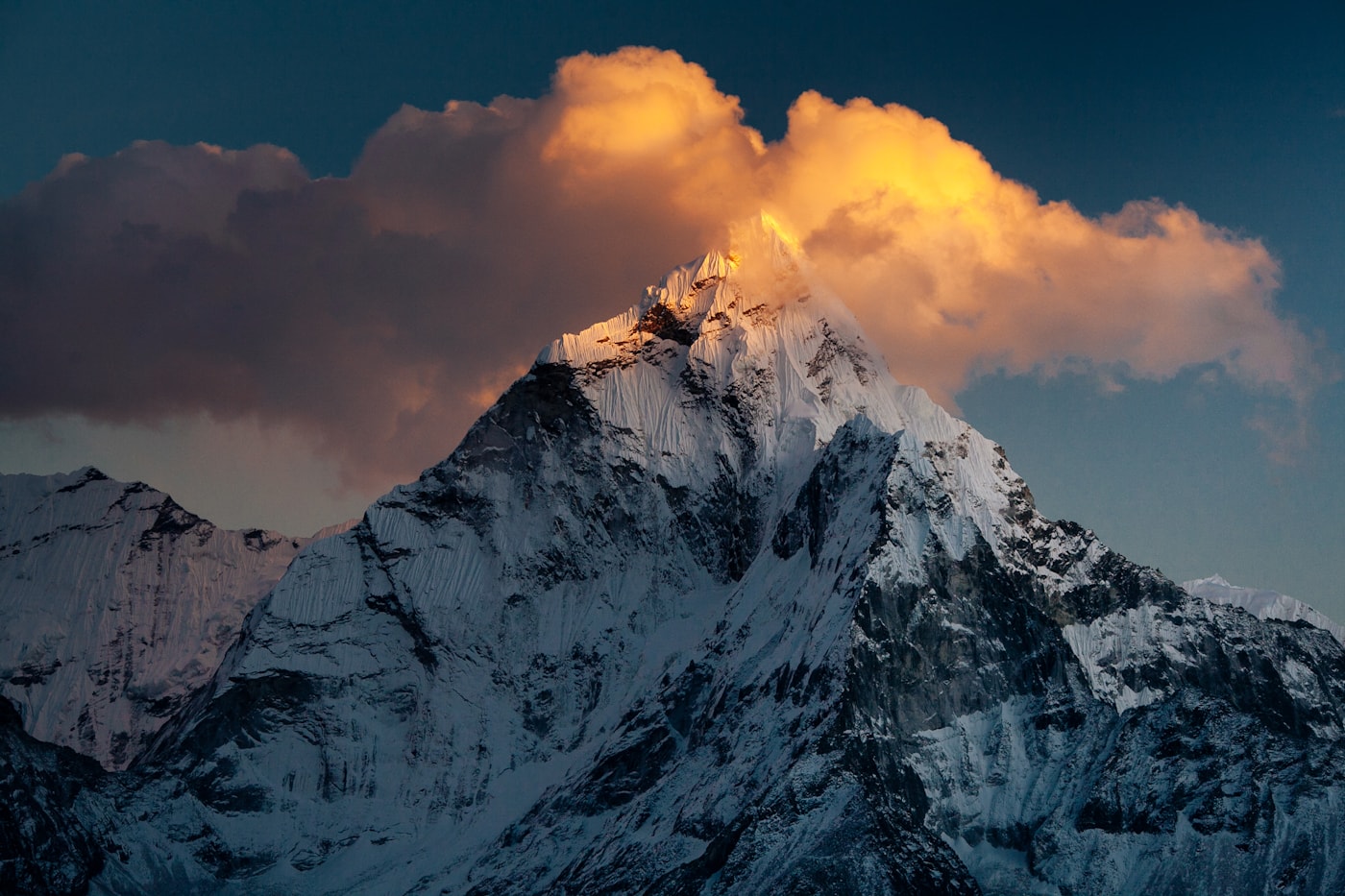
The Roof of the World Is Warming
The Hindu Kush Himalaya is sometimes called the "Third Pole" because of the enormous amount of snow and ice stored across its mountains. But that frozen world is undergoing profound change.
A major 2026 assessment from Kathmandu-based ICIMOD found that glaciers across the Hindu Kush Himalayan region have been losing ice at twice the rate observed around the year 2000. Another ICIMOD assessment found that glacier area across the region declined by about 12% between 1990 and 2020.
This is not only about losing beautiful glaciers. It affects water security, agriculture, ecosystems, hydropower, infrastructure and the safety of communities downstream.
The Glaciers Are Retreating
ICIMOD describes changes in the Hindu Kush Himalayan cryosphere — including glaciers, snow and permafrost — as unprecedented and largely irreversible over human timescales, primarily driven by climate change.
From Carbon to the Himalayas
ICIMOD warns that accelerated glacier melt, permafrost thaw, declining snow cover and increasingly erratic snowfall are already affecting the Hindu Kush Himalaya.
For generations, burning coal, oil and gas, industrial production, transportation and land-use change have added enormous quantities of greenhouse gases to the atmosphere.
Greenhouse gases increase the amount of heat retained within Earth’s climate system.
The warming affects oceans, weather systems, ecosystems and mountains around the world.
Glaciers retreat. Snow cover changes. Permafrost thaws. Ice becomes less stable.
Changing conditions can contribute to increased risks from glacial lake outburst floods, ice and rock avalanches, landslides and other cascading hazards.
Homes. Lives. Farms. Roads. Bridges. Schools. Hydropower. Tourism. Livelihoods. Emissions may be invisible. Their consequences are not.
Nepal Did Not Create This Crisis Alone
Climate change is a global problem, but responsibility for greenhouse-gas emissions has not been distributed equally. Industrialised economies built much of their development over generations of fossil-fuel use and account for a large share of historical greenhouse-gas emissions. Countries such as Nepal have contributed only a very small share by comparison.
Yet geography makes Nepal particularly exposed. Its steep mountains, glacier-fed river systems, monsoon climate, fragile slopes, dispersed settlements and dependence on climate-sensitive livelihoods create multiple layers of vulnerability.
Those who contributed least to the climate crisis can be among those forced to pay its highest price.
This Is What Climate Injustice Looks Like
Climate change is not simply a graph showing rising temperatures.
When Glaciers Become Hazards
Glaciers act as natural stores of freshwater. As temperatures rise and glaciers retreat, mountain water systems change.
In the near term, melting ice and changing precipitation can increase water and contribute to hazardous conditions. Growing or unstable glacial lakes can create the risk of sudden Glacial Lake Outburst Floods (GLOFs). Over longer periods, continued glacier loss threatens the reliability of water supplies on which communities and ecosystems depend.
Too much water can destroy. Too little water can devastate. Both are part of the challenge facing a warming mountain region.
The 2026 Disaster
Current scientific reporting indicates the catastrophic 26 August 2026 Bhote Koshi–Rasuwa flood was triggered by a massive collapse involving glacial ice and rock, sending destructive material into the river system. Scientists have highlighted warming, glacier instability and degrading permafrost as important concerns for increasingly unstable Himalayan mountain environments.
A Changing Himalaya
Climate change doesn’t create one problem. It creates a chain of problems.
The People on the Frontline
They are not statistics. The strongest part of this page should not be another scientific graph — it should be Nepali voices.
Verified first-person account to be added, with name, community, district, photograph and interview date.
Verified first-person account to be added, with name, community, district, photograph and interview date.
Verified first-person account to be added, with name, community, district, photograph and interview date.
Short explanation to be added, attributed and approved before publication.
Verified first-person account to be added, with name, community, district, photograph and interview date.
What climate change means for their future — in their own approved words.
What Does Climate Justice Mean?
Countries did not contribute equally to climate change, and they do not have equal resources to protect themselves from its consequences.
The Hindu Kush Himalayan mountains feed major river systems that support communities far beyond Nepal. ICIMOD estimates that changes to this mountain cryosphere have implications for nearly two billion people who depend directly or indirectly on the region’s water systems.
Protecting Himalayan snow and ice is not simply Nepal’s responsibility. The Himalayas are part of the world’s climate system.
This website does not frame ordinary people living in developed countries as the enemy. The issue is much larger: historical emissions, fossil-fuel-dependent development, global consumption and the collective failure to reduce greenhouse-gas emissions fast enough.
Climate change recognises no border. But responsibility for creating it — and the resources available to survive it — have never been equal.
Nepal cannot solve the climate crisis alone. Mountain communities should not be expected to carry its consequences alone either.
We do not want visitors to stop coming to Nepal because climate change is affecting the country. Tourism supports hundreds of thousands of livelihoods and many mountain communities. Instead, we want people to travel better.
Don’t stop exploring the world. Help protect the places you explore.
We did not create this crisis alone. But we live beneath the melting ice. We drink the water that comes from these mountains. We farm beneath their slopes. We build our homes beside their rivers. And when the mountains change, our lives change with them.
A Crisis We Didn’t Create.
A Pain We Feel.
A Future We Must Build Together.
All changing statistics on this page include their source and publication year. For glacier science we prioritise institutions such as ICIMOD, Nepal government agencies, IPCC and UN bodies, and peer-reviewed research.
We keep the distinction between scientific evidence and advocacy clear. We can strongly say that human-caused global warming is transforming the Himalayan cryosphere, and that countries with relatively small contributions to global emissions face disproportionate risks. We do not automatically attribute every individual flood, landslide or avalanche solely to climate change unless a scientific attribution study supports that conclusion.
Photography: real Nepal photographs only, particularly for historical and current glacier comparisons, affected communities, farmers, mountain workers, water sources and landscapes. AI-generated climate-disaster photographs are never used as documentary evidence.
Nepal contributed little to the climate crisis. Yet its mountains and its people are on the front line of its consequences.